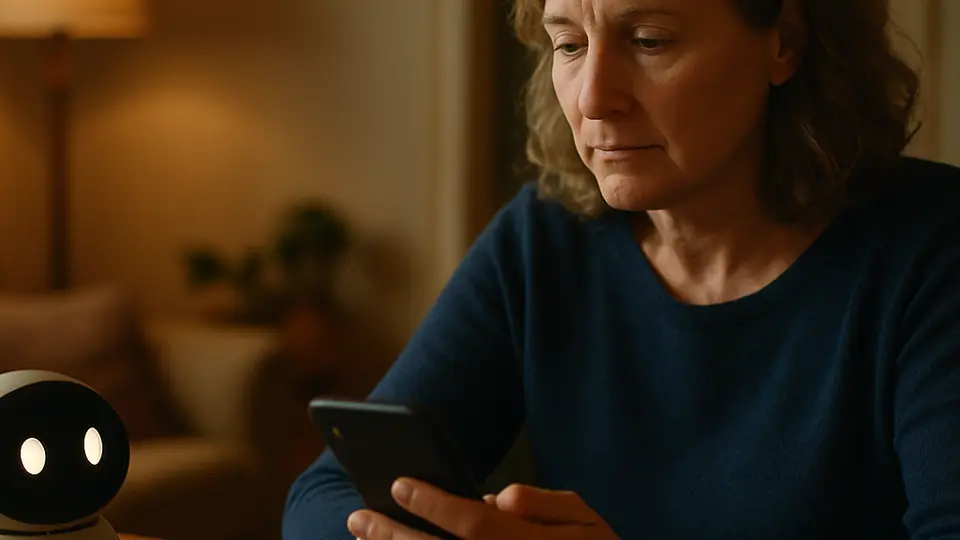
AI tools like ChatGPT or Gemini can summarize confusing discharge papers, draft update emails to siblings and doctors, and help organize medication schedules across multiple providers — cutting the administrative load that overwhelms most family caregivers. The key privacy rule: never paste full medical records or identifying details into a free general chatbot. Use AI for drafting and summarizing; add the personal specifics yourself.
If you're caring for an aging parent while also managing a job, your own family, and everything else — you already know the job is mostly paperwork and coordination. The hospital visit is exhausting; the discharge papers that follow can be just as hard to navigate. According to AARP, roughly 53 million Americans provide unpaid care to an older adult, and the administrative burden is one of the top reasons caregivers burn out. AI won't replace a good doctor or a real support network, but it can take a real bite out of the hours you spend deciphering, drafting, and organizing.
This guide is for the adult child managing a parent's care — not for the senior themselves. For technology designed to help your parent directly, see AI Companions for Seniors and AI Home Monitoring for Elderly Parents.
1. Translating Hospital Discharge Papers Into Plain English
Discharge papers after a hospitalization are written for clinicians, not families. They're full of abbreviations, Latin drug names, and instructions like "ambulate with supervision as tolerated" that mean nothing if you're just trying to know whether your mom can walk to the bathroom on her own.
This is one of the most genuinely useful things AI can do for caregivers right now.
What to do: Open ChatGPT, Gemini, or Claude and type something like:
"My father was just discharged from the hospital after hip surgery. The discharge instructions say he should 'avoid weight-bearing on the left lower extremity for six weeks.' Can you explain what this means in plain English, and list the main things a family caregiver should watch for during recovery?"
You can also retype specific sentences from the discharge papers that confused you and ask the AI to explain each one. You don't need to photograph or paste the entire document.
What to do with the result: The AI's explanation gives you a starting point for questions — write them down and ask the nurse or doctor at the follow-up visit to confirm. Don't treat the AI's interpretation as the final word on medical instructions.
2. Drafting Sibling Update Emails and Care-Coordination Messages
If you're the primary caregiver, you've probably found yourself on the phone three times in a row explaining the same situation to three different family members. AI can help you write a single, clear update email you can send to everyone at once.
What to do: Ask AI to help you build a short template:
"Help me write a weekly update email I can send to my siblings about our mother's health. She has dementia and lives in assisted living. I want to cover: how she seemed this week, any medical updates, upcoming appointments, and one thing people can do to help. Keep it warm but practical, under 200 words."
Once you have a template you like, you fill in the current week's details each time. AI can also help you draft harder messages — telling a sibling that a situation has gotten more serious, or writing formally to a nursing facility to request a care plan meeting.
3. Organizing Medication Schedules Across Multiple Providers
When a parent sees three or four specialists, each may prescribe something, and the medication list can grow quickly. AI can help you turn a messy collection of pharmacy printouts and prescription bottles into a clean, organized reference.
What to do: Describe the medications in plain text (or retype them from a pharmacy printout — just leave out your parent's name and date of birth):
"My mother takes the following medications. Can you organize these into a morning, evening, and as-needed table, and flag any combinations I should ask the pharmacist about? list the medications and doses"
The AI can surface potential interaction questions worth raising — but always have a pharmacist or prescribing doctor review the final list. AI doesn't have your parent's full medical history.
For appointments, AI can also help you create a simple tracking template or generate a list of questions to bring to each upcoming visit.
4. Preparing Insurance Paperwork and Appeals
Insurance paperwork is another place AI can genuinely help, because the core task is writing — explaining a situation clearly and formally. If a claim was denied, AI can help you draft an appeal letter.
What to do:
"My father's insurance denied coverage for a skilled nursing facility stay after his hospital discharge. The reason given was 'not medically necessary.' Help me draft a formal appeal letter. The discharge papers say he needs daily wound care and physical therapy. Keep the tone professional."
You fill in the specific claim number, dates, and your parent's name. The structure, formal language, and knowing which points to include are where AI saves you real time.
AARP has published guidance on using AI tools as a caregiver resource and offers sample appeal letters that work well alongside whatever AI helps you draft.
5. Finding Respite Resources Near You
Respite care means temporary coverage so the primary caregiver can rest — whether that's a few hours a week or a few days while you travel. Finding it can feel like a full-time job on its own.
AI can help you understand the landscape — what types of respite exist (adult day programs, in-home aides, short-term nursing facility stays), what Medicaid waiver programs typically cover, and what questions to ask when you call a provider. But AI often has outdated information about specific local programs, names, phone numbers, and current availability.
Better sources for actual local services:
- Eldercare Locator (eldercare.acl.gov) — a free US government referral service
- Your local Area Agency on Aging (find it through the Eldercare Locator)
- Your state's Medicaid HCBS waiver programs if your parent qualifies
Use AI to prepare for those calls: "What questions should I ask an adult day program to find out if it's right for someone with mild dementia?" is exactly the kind of prompt AI handles well.
6. Phone-Based AI Companionship for Your Parent
This one is for your parent — but it addresses a caregiver concern: loneliness and isolation between visits.
CareYaya's QuikTok is a phone-based AI companionship service designed for older adults who don't use smartphones. Your parent calls a regular phone number and has a conversation with an AI companion. No app to download, no screen to navigate, no account to set up.
For parents who are more tech-comfortable, apps like Claude on a phone or tablet can hold a conversation, read things aloud, or help recall details. But the key advantage of phone-based services is that they require nothing on the parent's end — which matters when your parent lives alone and you can't be there to help troubleshoot.
This is different from the companion apps covered in AI Companions for Seniors, which tend to be app-based and more feature-rich. Phone-based options lower the barrier to entry considerably.
What to Watch Out For
The privacy rule. Free general-purpose AI tools — ChatGPT, Gemini, Claude — are not HIPAA-compliant. Don't paste full medical records, insurance ID numbers, Social Security numbers, or your parent's full name and date of birth into them. You don't need to. Describe the situation in general terms ("my 78-year-old father, recovering from hip surgery") and the AI can still help you draft, organize, and summarize effectively.
AI makes things up. AI tools sometimes sound confident while being wrong — especially about specific programs, local services, phone numbers, and current eligibility rules. Always verify any specific claim, provider name, or benefit amount with an official source before acting on it.
AI is not a doctor, nurse, or social worker. For clinical decisions — adjusting medications, deciding whether a symptom needs emergency attention, choosing a care facility — there is no substitute for a qualified professional. AI is a drafting and organizing assistant, not a care advisor.
Caregiver burnout is real. AI can reduce time spent on paperwork. It can't reduce the emotional weight of caring for a parent. If you're overwhelmed, the Family Caregiver Alliance (caregiver.org) offers real human support and resources.
What to Try Next
If your parent's doctor visits feel rushed or confusing, How to Use AI to Prepare for a Doctor's Visit covers exactly how to use AI before and after appointments to make the most of limited time with a clinician. And if prescriptions have become hard to track or understand, AI Tools for Understanding Prescriptions walks through how to ask an AI to explain what a medication does and what side effects to watch for.